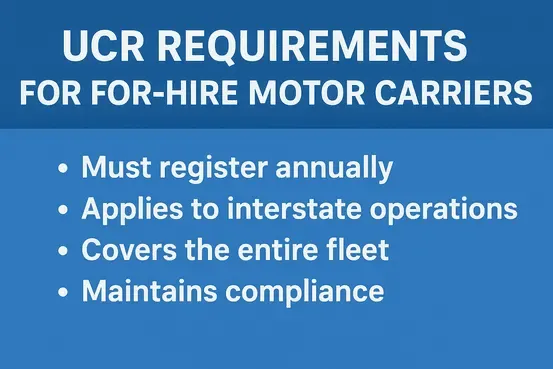
1. Who Must Register
A for-hire motor carrier must register under UCR if it:
-
Operates a commercial motor vehicle (CMV) in interstate commerce
-
Uses vehicles over 10,000 pounds GVW, or
-
Transports hazardous materials requiring placards
-
Travels across state lines or performs interstate business, even occasionally
Both USDOT and MC-authorized carriers fall under UCR unless specifically exempt.
2. What the UCR Registration Covers
UCR registration applies to:
-
The entire fleet (not each individual vehicle)
-
All vehicles operated within a given calendar year
-
For-hire motor carriers operating in any of the 41 participating states
The fee is based on fleet size rather than mileage or routes.
3. Annual Registration Requirement
For-hire carriers must:
-
Renew UCR every year
-
File based on the fleet size from the previous year
-
Pay one fee that covers all operations within UCR-participating states
Most states enforce UCR beginning January 1 of each year.
4. Compliance Responsibilities
For-hire motor carriers must ensure:
-
Proof of UCR registration is available for inspection
-
Payment is made before roadside enforcement begins
-
They do not operate in interstate commerce without an active UCR
Failure to comply may result in fines, citations, and out-of-service orders.
5. Enforcement and Penalties
Carriers may be penalized if:
-
UCR registration was never completed
-
Incorrect fleet counts were reported
-
Payment confirmation is missing during inspections
-
The carrier operates in multiple states without proper filing
Penalties vary by state and may be issued during roadside inspections, audit reviews, and compliance checks.
6. Special Considerations for For-Hire Carriers
For-hire motor carriers should also consider:
-
Leased Vehicles: The operating carrier, not the vehicle owner, is responsible for UCR.
-
Broker and Freight Forwarder Add-Ons: If a company also holds brokerage authority, separate UCR filing is still required (but at the lowest fee bracket).
-
New Entrants: Newly authorized carriers must register immediately once they begin interstate operations.
7. Why UCR Matters for For-Hire Carriers
UCR compliance helps ensure:
-
Smooth interstate travel without delays
-
Avoidance of roadside violations
-
Accurate contributions to state transportation safety programs
-
Maintenance of a clean safety and compliance profile