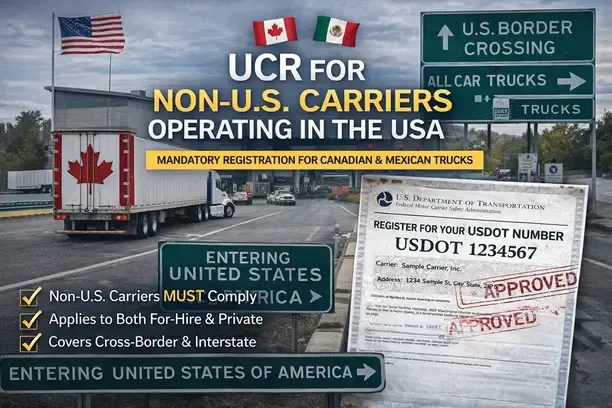
1. Do Non-U.S. Carriers Need UCR?
Yes. Non-U.S. carriers must register for UCR if they:
-
Operate commercial motor vehicles in the U.S.
-
Travel interstate (between U.S. states)
-
Are involved in for-hire or private transportation
-
Have an active USDOT number
This requirement applies even if U.S. operations are occasional or short-term.
2. Types of Non-U.S. Entities Required to Register
UCR applies to foreign-domiciled:
-
Motor carriers (for-hire & private)
-
Brokers
-
Freight forwarders
-
Leasing companies
3. USDOT Number Is Mandatory
Before registering for UCR, non-U.S. carriers must:
-
Obtain a valid USDOT number from FMCSA
-
Keep carrier information up to date in the FMCSA system
Without a USDOT number, UCR registration cannot be completed.
4. How Non-U.S. Carriers Register for UCR
Non-U.S. carriers register online using - https://www.fmcsa.me/
-
Their USDOT number
-
Fleet size (number of commercial vehicles)
-
Business and contact information
Registration must be renewed annually.
5. UCR Fees for Non-U.S. Carriers
UCR fees are based on fleet size, not nationality or domicile.
The same fee structure applies to:
-
U.S. carriers
-
Canadian carriers
-
Mexican carriers
-
Other foreign entities operating in the U.S.
6. Common Misconceptions
“We only enter the U.S. a few times per year.” → Still required
“We have trip permits.” → Trip permits do NOT replace UCR
“We’re based outside the U.S.” → UCR still applies
7. Enforcement and Penalties
Non-U.S. carriers are commonly checked at:
-
U.S. border crossings
-
Weigh stations
-
Roadside inspections
Penalties may include:
-
Fines
-
Out-of-service orders
-
Delays at ports of entry
8. Relationship Between UCR and Other Programs
UCR is separate from:
-
IRP (International Registration Plan)
-
IFTA (fuel tax reporting)
-
State trip permits
All programs must be compliant independently.
9. Annual Renewal Requirement
UCR registration:
-
Is valid for one calendar year
-
Must be renewed every year
-
Must reflect accurate fleet size
Failure to renew on time can result in enforcement action.
10. Best Practices for Non-U.S. Carriers
Register for UCR before entering the U.S.
Keep proof of registration accessible in the vehicle
Verify fleet size annually
Use a professional compliance or permit service if unsure
Final Note
If your company is not based in the U.S. but operates commercially within the United States, UCR compliance is mandatory. Staying registered helps avoid fines, delays, and enforcement issues at the border and on U.S. highways.