1. What Is the UCR Program?
The UCR program was created under the Unified Carrier Registration Act of 2005 to replace the old Single State Registration System (SSRS).
It requires carriers and related entities engaged in interstate commerce to register annually and pay fees based on the number of commercial vehicles they operate.
The collected funds are distributed to participating states to support motor carrier safety programs and compliance enforcement.
2. Interstate Carriers – UCR Applies
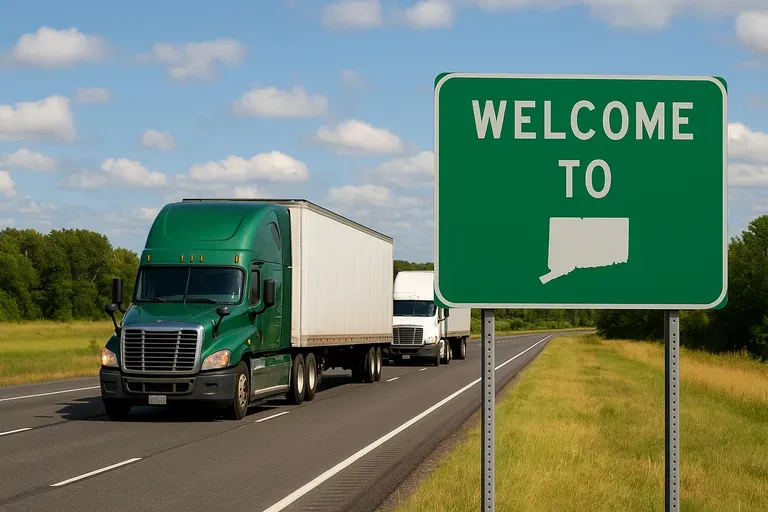
An interstate carrier is any business that operates commercial vehicles across state or international borders.
This includes:
-
Trucks traveling between two or more U.S. states
-
Carriers transporting freight to or from Canada or Mexico
-
Companies crossing state lines for pick-up or delivery
-
Vehicles passing through a state en route to another destination
If your operations cross state lines, you must register for the UCR program.
Examples:
-
A carrier based in New York delivering freight to New Jersey
-
A Texas trucking company hauling loads to Oklahoma
-
A North Carolina operator picking up shipments in Virginia
All these fall under interstate commerce, even if the trip starts and ends on the same day.
3. Intrastate Carriers – UCR Usually Does Not Apply
An intrastate carrier operates entirely within one state and does not cross state lines or engage in interstate commerce.
These carriers:
-
Deliver goods only within their home state
-
Do not carry freight that originated or is destined for another state
-
Do not cross state borders for any part of their route
Intrastate-only carriers are generally exempt from UCR registration.
Example:
A dump truck company operating solely within Georgia, hauling gravel between two in-state cities, is an intrastate carrier and typically does not need a UCR registration.
4. The “Interstate Commerce” Rule Can Be Tricky
Even if a truck never physically leaves the state, it may still be considered part of interstate commerce under federal law if it handles goods that are moving in interstate trade.
For instance:
-
A local carrier in Illinois that delivers goods to a Chicago warehouse, where those goods are later shipped to another state, may still be classified as participating in interstate commerce.
Because of this, it’s crucial to verify your company’s status before assuming you’re exempt.
5. Entities That Must Register Under UCR
You must register and pay UCR fees if you are any of the following and operate in interstate commerce:
-
For-hire motor carrier
-
Private carrier transporting your own goods
-
Broker
-
Freight forwarder
-
Leasing company involved in interstate trucking operations
6. Penalties for Non-Compliance
Operating in interstate commerce without a valid UCR registration can lead to:
-
Fines and citations (typically $100–$500 per vehicle)
-
Vehicle detainment or shutdown orders
-
Delayed renewals or loss of operating authority
UCR enforcement officers and state inspectors routinely verify compliance at weigh stations and roadside checks.
7. How to Register for UCR
If you determine that your business engages in interstate operations, registration is simple:
-
Visit the website: www.fmcsa.me
-
Select your base state (where your business is registered).
-
Enter your USDOT number and company details.
-
Pay the annual fee based on fleet size.
Registration must be renewed every year, typically starting in October for the following calendar year.
8. Key Takeaways
| Category | Definition | UCR Required? |
|---|---|---|
| Interstate Carrier | Operates across state or national borders | Yes |
| Intrastate Carrier | Operates only within one state | No |
| Broker / Freight Forwarder | Arranges or handles interstate shipments | Yes |
| Private Carrier (Interstate) | Moves own goods across state lines | Yes |
Conclusion
If your trucking company crosses state borders or participates in the movement of goods across state lines, you are subject to UCR rules.
Intrastate-only carriers, however, remain exempt — but should still review their business operations closely to ensure they aren’t unknowingly part of interstate commerce.
Maintaining proper registration helps avoid fines, ensures compliance, and keeps your trucks moving without regulatory interruptions.