1. What “Fleet Size” Means Under UCR
For UCR purposes, fleet size is defined as:
The total number of commercial motor vehicles (CMVs) owned or operated by the company during the registration year.
This includes vehicles that:
-
Are owned, leased, or rented
-
Operate in interstate commerce
-
Are used at any point during the year (not just currently active)
Important: Even if a vehicle is sold or parked later in the year, it may still count if it operated during that registration year.
2. Vehicles That Count Toward Fleet Size
Vehicles included in the UCR fleet count generally are:
-
Trucks or truck-tractors over 10,000 lbs GVWR
-
Vehicles transporting hazardous materials requiring placards
-
Passenger vehicles designed to carry 9+ passengers (for compensation) or 16+ passengers (not for compensation)
Each qualifying vehicle counts as one unit, regardless of:
-
Miles driven
-
Revenue generated
-
How often the vehicle is used
3. UCR Fee Brackets by Fleet Size
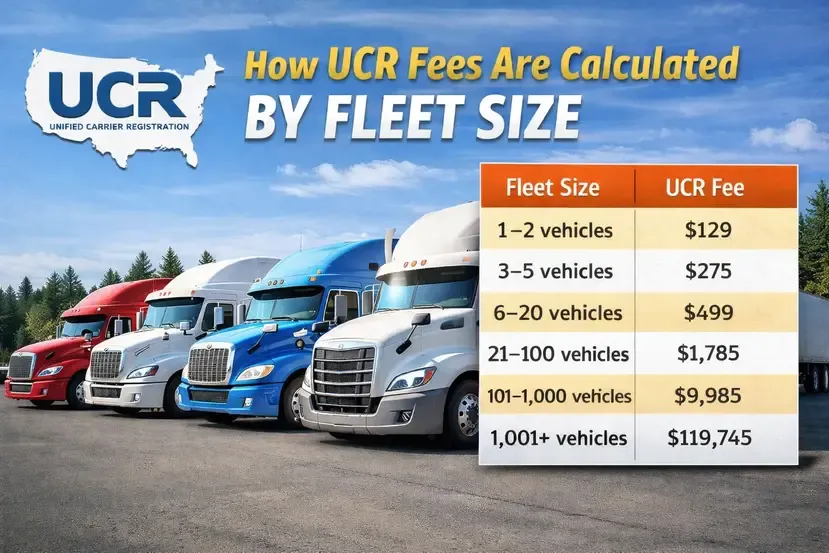
UCR fees are grouped into fleet size brackets, not charged per vehicle individually.
Typical brackets include:
-
0–2 vehicles
-
3–5 vehicles
-
6–20 vehicles
-
21–100 vehicles
-
101–1,000 vehicles
-
1,001+ vehicles
Each bracket has a flat annual fee, meaning:
-
A carrier with 3 vehicles pays the same as one with 5 vehicles (within that bracket)
-
Moving into a higher bracket increases the total fee
4. Who Uses Fleet Size to Pay UCR Fees
Fleet size applies to:
-
For-hire motor carriers
-
Private carriers
-
Owner-operators
-
Freight forwarders
-
Leasing companies
Brokers and freight forwarders without vehicles still register under UCR but pay a separate flat fee, not based on fleet size.
5. How Fleet Size Is Verified
States verify fleet size using:
-
USDOT MCS-150 filings
-
IRP records
-
Roadside inspections
-
Audits or compliance reviews
Underreporting vehicles can result in:
-
Back-fees
-
Penalties
-
Citations at weigh stations or roadside inspections
6. Annual Fee Adjustments
UCR fees are:
-
Set annually
-
Approved by the UCR Board
-
Subject to change based on program funding needs
Because of this, carriers must:
-
Recalculate fleet size every year
-
Pay the current year’s fee, even if fleet size hasn’t changed
7. Common Fleet Size Mistakes
Counting only active vehicles
Excluding leased or temporarily used trucks
Using last year’s fleet size
Forgetting vehicles added mid-year
Best practice: Use the maximum number of vehicles operated at any time during the year.
Key Takeaways
-
UCR fees are not per vehicle, but per fleet size bracket
-
Fleet size includes all qualifying vehicles used during the year
-
Larger fleets pay higher fees due to higher regulatory impact
-
Accurate reporting avoids fines and enforcement issues